


Veri*factu
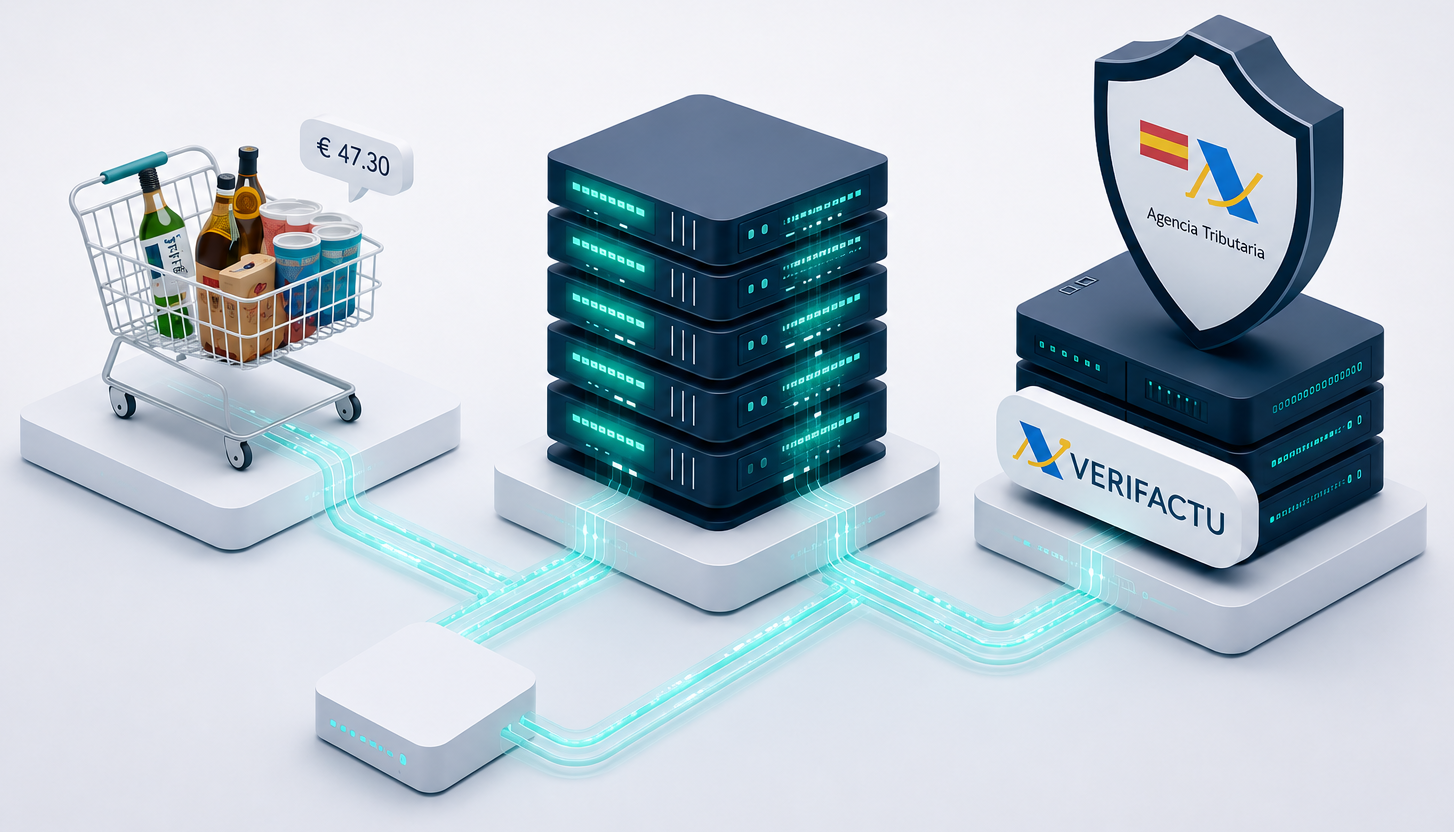
Veri*factu is the term that refers to the requirements that Information Billing Systems (Sistemas Informáticos de Facturación (SIF)) must meet, in our case, the Point of Sale Terminal (POS).
Veri*factu's priority is to secure the keys in the company's or self-employed individual's billing records:
- Sequential recording of each system transaction and event (logs).
- Generation of a unique cryptographic digital fingerprint ('hash') for each record.
- Linking of records using the hash, creating a chain that prevents the deletion or insertion of invoices.
- Inclusion of a QR code on invoices, allowing for quick verification of basic data.
- Technical capacity to electronically submit records to the Spanish Tax Agency (AEAT).
How Veri*factu Works
The process of sending invoices with Veri*factu is almost entirely automatic and is carried out through certified invoicing software adapted to Veri*factu. It works as follows:
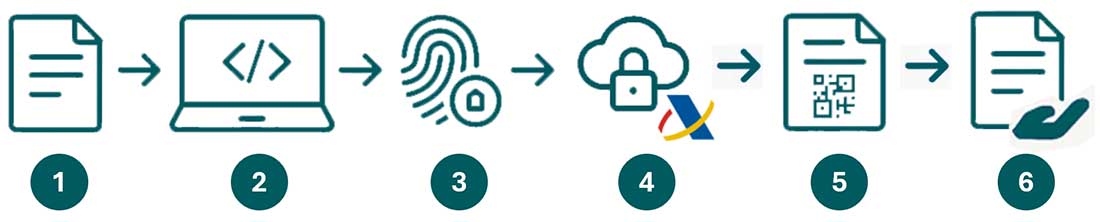
- Invoice generation: The invoice for the customer is created from the billing program (POS or management software).
- Automatic record creation: When the invoice is generated in the software, a billing record is created. This record is not the invoice itself, but a computer file (in XML format) with the essential data of the transaction.
- Signature and "Digital Fingerprint": The system applies a hash (digital fingerprint) to the record, linking it to the previous record, thus creating a 'blockchain' that guarantees the integrity and immutability of the data. No one can modify an issued invoice without breaking this chain.
- Submission to the Spanish Tax Agency (AEAT): The SIF or POS connects to the Tax Agency immediately, securely, and sends the record. The AEAT receives, validates, and stores it, also securely.
- Incorporation of a QR Code: The software generates a QR code and embeds it in the PDF of the final invoice or receipt issued by the POS.
- Sending the invoice to the customer. This QR code allows the customer (and the Spanish Tax Agency) to verify that the invoice has been declared correctly.
The Veri*factu system is the technical basis of modern fiscal control and prepares the ground for the implementation of B2B (Business To Business) or inter-company electronic invoicing.
| It affects the vast majority of economic actors in Spain who issue invoices. |

Digital Certification and Electronic Signatures
An electronic signature is a set of electronic data attached to a digital document (such as an invoice) that primarily serves two functions:
- Identifying the signatory: It unequivocally proves who issued or signed the document.
- Guaranteeing integrity: It ensures that the document's content has not been altered or modified in any way after signing. It acts as a kind of digital seal.
To create such a signature with full legal validity, an Electronic or Digital Certificate is required.